
TL;DR
A du'a you make for another Muslim when they are not there is answered, and an angel says "Amin, and for you the same" (Sahih Muslim 2732–2733). It is also fine to ask others to pray for you: Umm al-Darda asked a visitor to make du'a for her family. Name the person, ask for something specific, and choose the times du'a is most hoped to be answered.
- Du'a for someone in their absence is answered, and the angel asks the same for you
- Asking others to pray for you is fine; Umm al-Darda did it
- Make it in sujud or in the last third of the night
- Quran Gate's Ummah wall lets you post a du'a request under your display name
There is a quiet kind of worship that costs nothing and comes back to you twice: making du'a for someone who will never know you did.
This guide covers why it matters, how to do it well, and how to ask others to pray for you without feeling awkward about it.
The hadith: an angel asks the same for you
The Prophet ﷺ said that the du'a a Muslim makes for his brother in his absence is answered, and that an angel appointed beside him says each time: Amin, and for you the same.
Sahih Muslim 2732–2733
Think about what that means. When you ask Allah to heal a friend, ease a stranger's debt or guide someone's child, you are also asking for those things for yourself, with an angel saying amin.
Is it okay to ask others to pray for you?
Yes. In the same chapter of Sahih Muslim, Safwan describes visiting the home of Abu al-Darda. Abu al-Darda was out, so his wife, Umm al-Darda, asked Safwan whether he was going on Hajj that year, and told him: make du'a for us for good, before narrating this very hadith.
Asking is not a weakness. It is how the Ummah carries each other.
How to make du'a for someone
- Name them. Say their name, or picture them, and ask for something specific: a recovery, a job, a child, patience, guidance.
- Ask in their absence. That is the du'a the hadith describes. They don't need to know.
- Choose the best moments. The Prophet ﷺ said a servant is closest to his Lord while in prostration, so make plenty of du'a in sujud (Sahih Muslim 482). He also said Allah descends in the last third of every night and asks who is calling upon Him so He may answer (Sahih al-Bukhari 1145).
- Use du'as from the Quran and Sunnah if you don't know what to say. Rabbana atina fid-dunya hasanah asks for every good in both worlds, and the du'a for parents is one Allah taught us Himself.
- Keep it going. A short du'a every day for the same person is worth more than one long one.
How to ask others to make du'a for you
- Ask people you trust, and ask for good, not for harm to anyone.
- Be as specific as you're comfortable with. "Please make du'a for my exam tomorrow" is easier to remember than "pray for me".
- Protect privacy. Don't share other people's private details, and share only what you're happy for others to see.
- Make du'a back. The same hadith applies to you when you pray for them.
The Ummah wall: a du'a request, seen around the world
We built the Ummah tab in Quran Gate for exactly this. You can post:
- "Make du'a for me": a short request, such as an exam, an illness, a decision, or a family member.
- "Read a surah for me": ask others to read a surah you choose.
- Gratitude or a reflection: share what Allah has given you or what an ayah meant to you today.
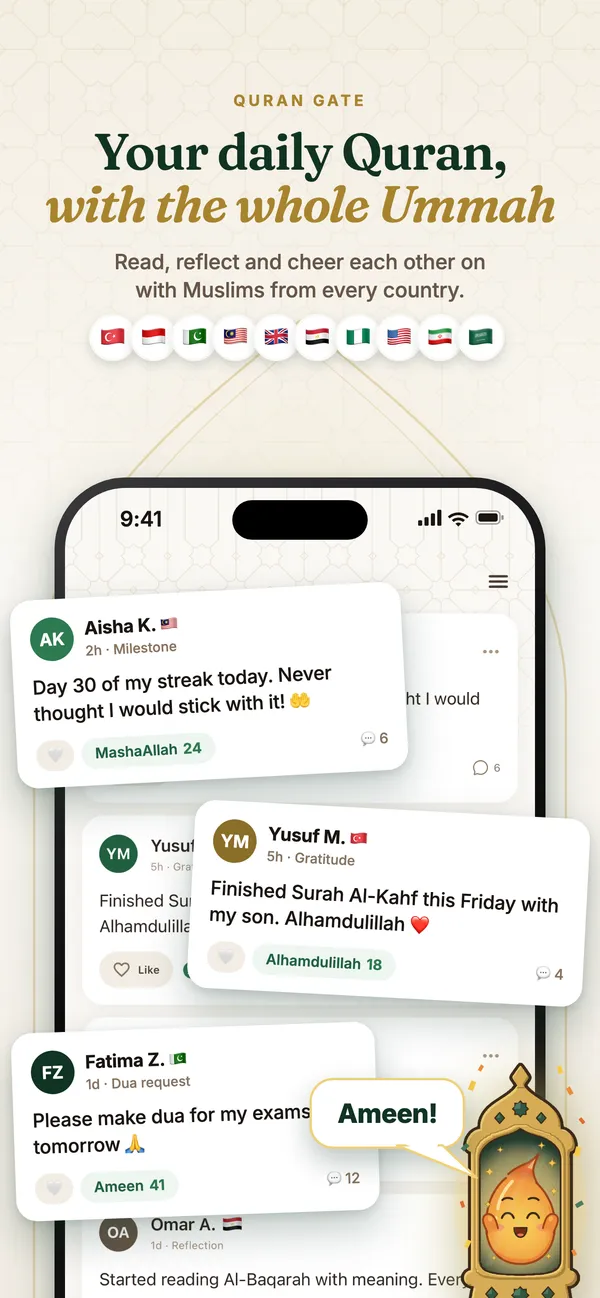
Others answer with "I prayed", Ameen, Alhamdulillah or a short reply, so you can see that people really did make du'a for you. A few details that matter:
- Under your display name. Reading is open, but to post or reply you sign in with Apple or Google and use a display name. There is no anonymous posting, and the community is for ages 16 and over.
- Reviewed before it's shared. Every post and reply is checked before it appears, and links and phone numbers are blocked.
- You stay in control. You can report a post, reply or user, hide a post or reply, block a user, and delete your own posts and replies. Posts close after 30 days.
- A "Make du'a" feed shows the requests with the fewest prayers first, so nobody's request is left behind.
If you want company for your Quran as well as your du'a, Quran Gate's Circles let you read the same part each day with Muslims worldwide, such as a juz a day through Ramadan.


Frequently Asked Questions
Is it allowed to ask someone to make dua for you?
Yes. When Safwan visited the house of Abu al-Darda, Umm al-Darda asked him to make du'a for them and told him the hadith that a Muslim's du'a for his brother in his absence is answered (Sahih Muslim 2732–2733).
What happens when you make dua for someone else?
The Prophet ﷺ said that the du'a of a Muslim for his brother in his absence is answered, and an angel appointed beside him says: Amin, and for you the same (Sahih Muslim 2732–2733).
Where can I ask Muslims to make dua for me?
Ask family and friends you trust, people at your masjid, or post a du'a request on the Ummah wall in the Quran Gate app, where Muslims around the world can see it, make du'a and tap "I prayed". You sign in with Apple or Google and post under a display name; there is no anonymous posting, and the community is for ages 16 and over.
