اللَّهُمَّ أَنْتَ رَبِّي لَا إِلَٰهَ إِلَّا أَنْتَ، خَلَقْتَنِي وَأَنَا عَبْدُكَ، وَأَنَا عَلَىٰ عَهْدِكَ وَوَعْدِكَ مَا اسْتَطَعْتُ، أَعُوذُ بِكَ مِنْ شَرِّ مَا صَنَعْتُ، أَبُوءُ لَكَ بِنِعْمَتِكَ عَلَيَّ، وَأَبُوءُ لَكَ بِذَنْبِي، فَاغْفِرْ لِي، فَإِنَّهُ لَا يَغْفِرُ الذُّنُوبَ إِلَّا أَنْتَ
Allāhumma anta rabbī lā ilāha illā ant, khalaqtanī wa ana 'abduk, wa ana 'alā 'ahdika wa wa'dika mastaṭa't, a'ūdhu bika min sharri mā ṣana't, abū'u laka bini'matika 'alayy, wa abū'u laka bidhanbī, faghfir lī, fa innahū lā yaghfirudh-dhunūba illā ant
Meaning: O Allah, You are my Lord; there is no god but You. You created me and I am Your servant. I keep Your covenant and promise as best I can. I seek refuge in You from the evil I have done. I admit Your blessings upon me, and I admit my sin. So forgive me, for none forgives sins but You.
Its virtue
Whoever says it in the day with firm faith and dies before evening is among the people of Paradise, and whoever says it at night with firm faith and dies before morning is among the people of Paradise.
— Sahih al-Bukhari 6306
Make it a daily du'a
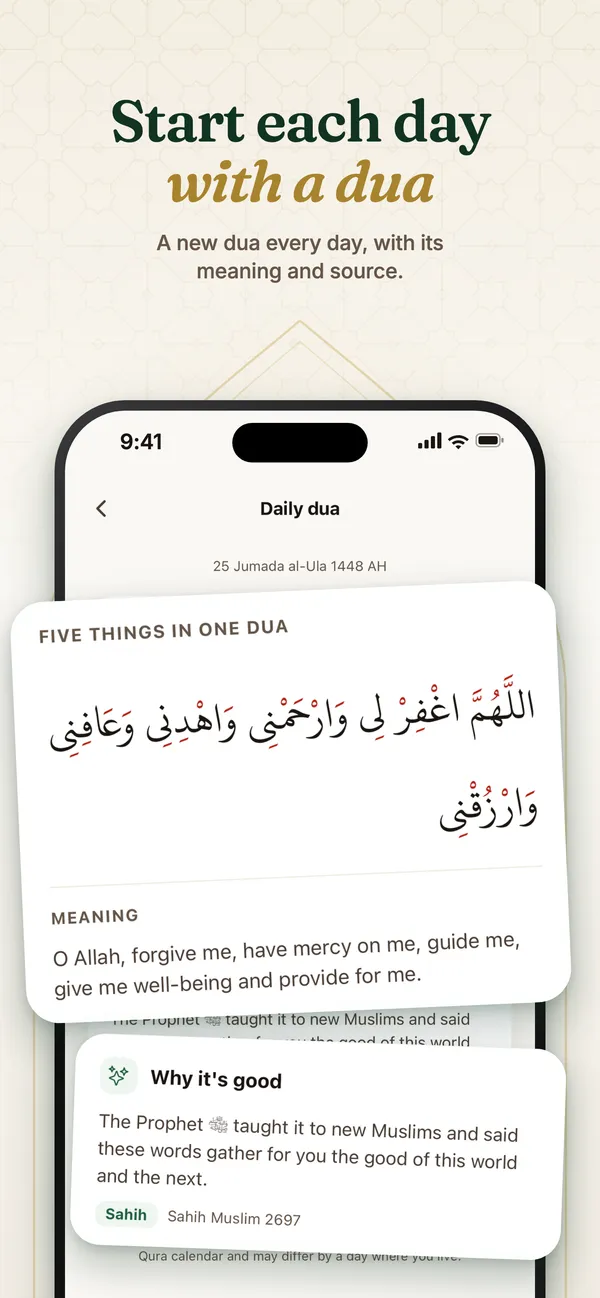
Quran Gate gives you one dhikr and one du'a every day, with its meaning, why it's good and its source, plus special ones for Jumu'ah, Ramadan, 'Arafah and the Eids. Tap the counter as you go and it remembers where you are.


Questions
What does The master of seeking forgiveness mean?
O Allah, You are my Lord; there is no god but You. You created me and I am Your servant. I keep Your covenant and promise as best I can. I seek refuge in You from the evil I have done. I admit Your blessings upon me, and I admit my sin. So forgive me, for none forgives sins but You.
What is the virtue of The master of seeking forgiveness?
Whoever says it in the day with firm faith and dies before evening is among the people of Paradise, and whoever says it at night with firm faith and dies before morning is among the people of Paradise. (Sahih al-Bukhari 6306)
How do you say The master of seeking forgiveness?
Allāhumma anta rabbī lā ilāha illā ant, khalaqtanī wa ana 'abduk, wa ana 'alā 'ahdika wa wa'dika mastaṭa't, a'ūdhu bika min sharri mā ṣana't, abū'u laka bini'matika 'alayy, wa abū'u laka bidhanbī, faghfir lī, fa innahū lā yaghfirudh-dhunūba illā ant
Related
Arabic text as in the sources. English meaning written by the Quran Gate team; check every reference in the collections cited.
