ذَهَبَ الظَّمَأُ، وَابْتَلَّتِ الْعُرُوقُ، وَثَبَتَ الْأَجْرُ إِنْ شَاءَ اللهُ
Dhahabaẓ-ẓama', wabtallatil-'urūq, wa thabatal-ajru in shā' Allāh
Meaning: The thirst is gone, the veins are moistened, and the reward is confirmed, if Allah wills.
Its virtue
The Prophet ﷺ said this when he broke his fast. Allah placed “I am near; I answer the call of the one who calls” (2:186) right among the verses about fasting.
— Sunan Abi Dawud 2357
Make it a daily du'a
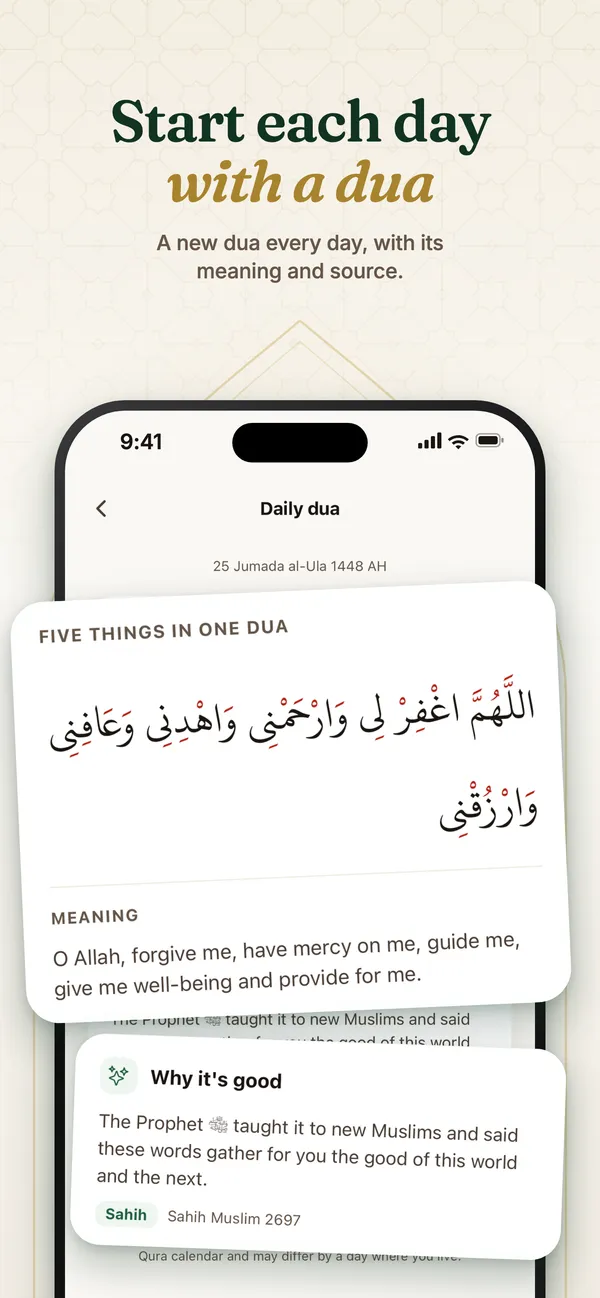
Quran Gate gives you one dhikr and one du'a every day, with its meaning, why it's good and its source, plus special ones for Jumu'ah, Ramadan, 'Arafah and the Eids. Tap the counter as you go and it remembers where you are.


Questions
What does The dua when breaking the fast mean?
The thirst is gone, the veins are moistened, and the reward is confirmed, if Allah wills.
What is the virtue of The dua when breaking the fast?
The Prophet ﷺ said this when he broke his fast. Allah placed “I am near; I answer the call of the one who calls” (2:186) right among the verses about fasting. (Sunan Abi Dawud 2357)
How do you say The dua when breaking the fast?
Dhahabaẓ-ẓama', wabtallatil-'urūq, wa thabatal-ajru in shā' Allāh
Related
Arabic text as in the sources. English meaning written by the Quran Gate team; check every reference in the collections cited.
